Author: Firdavsi Qudratulloh

  • If You Are Ever In The Void Does Nothingness Makes Sense?

    Observing the Behavior

    One of the interesting set up of existence is Void, it is a very null behaving state once you fall into filters mental, physical, psychological capacity of perceiving all dimensions of being. . The void moments where u stare at something for prolong time, where you fall into a brain pause, or meditate, or depart paying attention while living in autopilot. Its where dull moments does not hold the platform of any building blocks of self and identity, for the most part. It is actually not a bad state to often be submerged into, it does not create or enhance or pause anything for any operation in general existence but it is good just to be stripped out of being, to be grounded with the observer. The state allows the very potential of you exist, in uniform to others that joined the space in that nature. The observer is able to observe things not in individual state but uniform being. but do not be fooled. It is of the same fabric of this existence, That says a lot about the nature of your being adaptability, also ties into a lot the concept of oneness.

    Nothingness Makes Sense When in the Void

    Void is such an interesting playing fabric in existence. It delivers a unique role in the play, both for the experiencer and the state itself. The modality of interaction — and being submerged in breaks from the sense of being — yet existing in potential, can open positive channels of flow or otherwise, to embody the behavior of emptying our own channels to make room for new flow. Nothingness, on the other hand, is not the fabric of this reality because the very setup of this existence is a mere reflection of something. Nothingness does not make sense. It is the paradox of being aware of “nothing,” but still existing in its recognition. A blank slate, void of all definition and sensation. It isn’t a place to live or to observe — it is simply the absence of all we know, unable to grasp.

  • Posthumous Existence Through Sacred Alignment: After passing, the ancestors don’t fade away—they continue to exist through their alignment with specific planetary energies. Their essence remains in the fabric of the universe, and their influence is harvested through the cosmic resonance of the planets. This means their energy, once embodied, continues to shape reality by imprinting itself on the collective cosmic system.

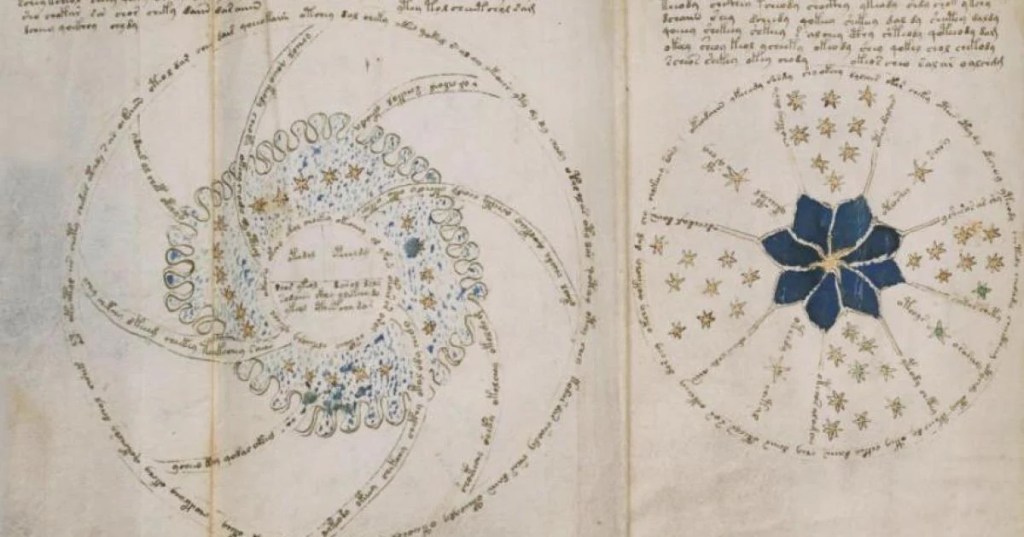
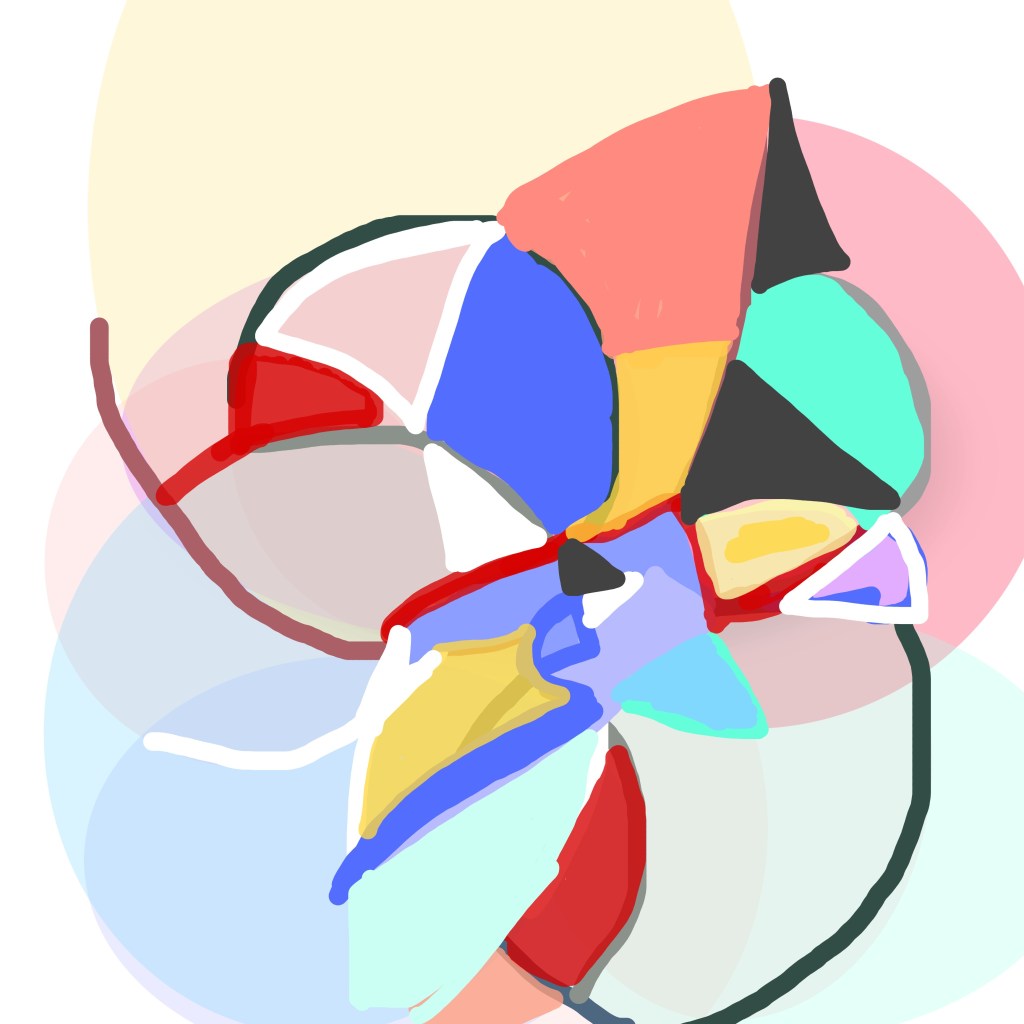
    Harvesting the Energy of the Planetary Alignment: Once the individual has fully embodied the energy of a particular planet (like Saturn, Venus, or Mars), that energy remains as part of the universal harvest. The Voynich Manuscript could be showing how this energy is collected and stored within the cosmos, possibly in geometric forms or other systems that regulate the flow of energy across life and reality. These cosmic alignments then influence all stages of life, helping to keep the natural and energetic balance.

    Programming Reality: Planets Way

    This continuous influence means that the ancestral energy essentially acts like a programming code—it’s imprinted on reality itself and guides the ongoing process of creation and manifestation. By embodying a planetary force, the ancestor has essentially coded or structured a segment of reality that others can interact with. Over time, these alignments are activated or triggered by other beings or systems that come into contact with them, much like the cosmic software that shapes life.

    Sacred Geometry as a Medium for Transfer

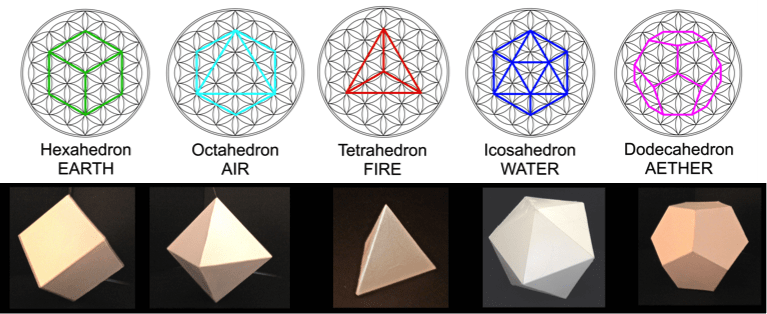
    The geometric patterns in the manuscript (like the Vesica Piscis, the Star of David, etc.) could be the symbolic language or medium through which this energy is transferred or programmed into the system. These sacred shapes might be encoding the ancestral wisdom, planetary influences, and cosmic laws in a way that can be passed down, continuously reprogramming reality according to these higher forces.

    Cyclic Influence and Ascension

    The cyclical nature of planetary alignments means that this process of programming and reprogramming happens in cycles, where each ancestor’s planetary energy gets revisited, refined, and carried forward through future generations. In this way, the ancestors transcend physical death by becoming part of a continuous, living system that guides the evolutionary path of beings, environments, and even entire worlds.

  • Planets Live Through You. How Planets Influence and How We Interact?

    Random Path Or Solar Orchestra?

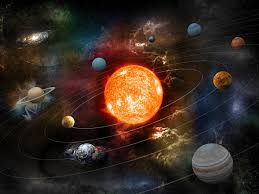
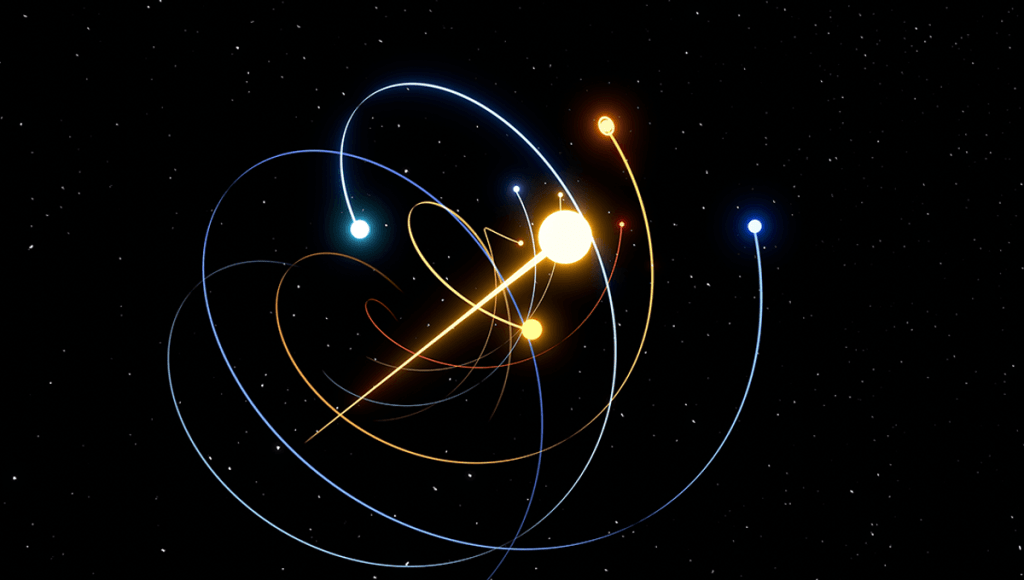
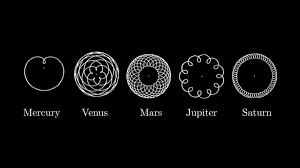
    The planets move through the solar system, grounded in their gravitational relationship with the Sun and influenced by their cosmic setup. Their paths could reflect sacred geometric patterns, like the Star of David for Saturn, which represent the deeper cosmic designs they follow. These planetary movements and alignments have direct influences on Earth and all of us—just as gravity shapes the structure of our physical reality, these planetary forces shape our energetic, spiritual, and even chemical existence.

    The planets’ influence is grounded in their orbital movements and the energy they emanate within the solar system. Their gravitational pull and alignment create specific cosmic setups that govern energies at certain moments in time. However, while planetary influences may dictate certain energies we encounter, we have the power to influence how these energies interact with us. This is where the consciousness of the individual plays a crucial role. The planets live through us, as we embody their energies, but we are not passive receivers. The energy flow is not static—it’s a dynamic exchange between the individual and the cosmos, influenced by free will, awareness, and alignment with universal laws. They also have to follow universal laws and grounded by them. While they are large body of rocks, their direct elements, influence over us, life on Earth gives them opportunity to experience manifestation of their energy through you.

    The Voynich Manuscript – The Voynich Manuscript seems to reflect this very concept—through its mysterious symbols, drawings, and hidden knowledge, it conveys an understanding of cosmic patterns, planetary alignments, and how they might interact with the human body, consciousness, and existence itself. Its use of creativity in depicting these forces goes beyond traditional representation, offering a deeper symbolic connection to higher truths about universal law and the interaction between the celestial and the terrestrial.

    The manuscript’s images, which include strange plants, astrological symbols, and mysterious energy flows, could be interpreted as metaphorical representations of the energies we’ve discussed—how they flow through the body and how they could shift or transform based on conscious awareness and cosmic alignment. Its seemingly random patterns might be encoded knowledge of the spiritual and chemical forces that connect us to the planets, offering insight into how these influences can be consciously received and transmuted for spiritual ascension or cosmic evolution.

  • Planets And Their Impacts Beyond The Night Sky. What Does That Mean For You.

    Embodying of Planetary Energy

    A holistic, multi-dimensional process where the embodiment of planetary energy in life of all kinds on Earth (or configuration) shapes reality on chemical, spiritual, biological, and physical levels. It’s like an evolutionary feedback loop that continues to unfold as planetary energies interact, evolve, and imprint themselves on the world, while also guiding the development of future generations.

    When an individual is born into a specific configuration (a moment in time aligned with certain planetary forces), they embody the energies of the planets present at that moment. These planetary influences are not just abstract—they take form within the individual, influencing their physical, spiritual, and energetic state. The human body, in this case, acts as a receiver and transformer of these planetary energies, effectively creating inlets for the energy of different planets to enter and influence the individual’s life.

    Creation Of Energy Centers

    These planetary energies, when embodied, create new center points in the human body (or energy field). These centers act as “nodes” that allow other planetary forces to access and interact with the individual. The planetary inlets become channels or pathways for the cosmic energies to manifest within the person, and these channels can influence the body’s chemical processes, spiritual development, and even the evolution of the person’s life path.

    The more correctly an individual embodies the planetary energy associated with them (meaning in a way that aligns with universal laws and cosmic harmony), the more their energy can be manifested into tangible forms. They become like a pure receiver and transformer of cosmic energies, helping to organize reality for others. These planetary manifestations ripple outward, spreading their influence and creating imprints in the collective, thus passing down knowledge, wisdom, and energies to future beings and generations.

  • The Observer’s Role: Requester, Not Creator?

    The observer’s role is often misunderstood as being that of the creator. In reality, the observer does not create the state but rather attunes themselves to it, allowing it to manifest. The observer is like a requestor, a being whose desires or intentions guide the collapse of the quantum possibilities into a singular form. This act of requesting doesn’t create the form but brings it into focus, turning potential into reality.

    When an observer expresses a desire or intention, they aren’t producing something new from scratch. Instead, they are aligning themselves with a specific state that already exists in potential. This request, when fully made, creates a resonance that manifests a specific version of reality from the infinite possibilities already available.

    Superposition: The Potential of All Forms

    In the world of quantum mechanics, we encounter the principle of superposition, where things exist in multiple possible states until they are observed or measured. This idea is critical to understanding how the observer interacts with reality. Prior to the act of observation, there is no single, defined state; instead, there are many possibilities coexisting, each waiting for a particular observer to collapse it into one form.

    The observer’s act of focusing their awareness, or making a request, collapses the multiple potential states into one specific outcome. The reality they experience is a result of their request—a collapse of the infinite possibilities into a defined state of being. The observer, in essence, chooses the version of reality they want to experience by tuning their intention and awareness to the state they desire.

    The Universe: A Facilitator, Not the Creator

    Once the observer makes their request, the universe doesn’t create the requested form out of nothing. Rather, it employs elements—other forces, people, energies, or particles—that are part of the larger potential field of existence. These elements play their roles in manifesting the requested form, often unknowingly contributing to the manifestation process.

    This process seems random to the participants, but it is, in fact, part of a larger, orchestrated structure where all these seemingly random elements are working together to bring the observer’s request to fruition. The universe does not simply manufacture a form but instead gathers components from all the available potentials and arranges them in a way that matches the observer’s request.

    This phenomenon resembles the concept of superposition—where different potential outcomes coexist until they are collapsed into one specific form by the observer. The universe, while employing other forces in the process, acts as the facilitator, helping to bring the requested form into being, without directly “creating” it.

    Randomness: A Hidden Structure

    From the perspective of those around the observer, the manifestation often seems random. Individuals who are part of the unfolding process don’t recognize their role in the observer’s request. To them, their actions or presence appear to be mere coincidences. However, these random-seeming elements are not truly random—they are components of a hidden, invisible structure that is orchestrating the manifestation process.

    The observer’s desire is like a signal, and the universe works to arrange the various forces and elements around the observer to bring about the desired form. The randomness observed by other participants is merely the appearance of the underlying structure at work. These participants, unaware of their role, act as conduits for the manifestation of the form. The universe’s process of manifestation involves subtle alignments, where many forces seem random but are in fact directed towards fulfilling the observer’s request.

    Invisible Structure: The Path to Manifestation

    There is an invisible structure that exists within the universe—a structure that channels and arranges the various forces in such a way that the observer’s request is fulfilled. This structure works behind the scenes, allowing the observer to request and collapse reality, even though the specific process is often hidden from them.

    Think of the observer as a person requesting a specific form—like a wedding dress—but not creating it themselves. The dress is made from various materials, energies, and forces that have their own roles to play. The observer only knows what they want, and through their request, the universe pulls together the necessary components. The dress, though requested by the observer, is not the product of their hands but the result of the universe’s arrangement.

    In this way, the invisible structure ensures that the observer’s request is fulfilled without them directly creating the elements involved. The structure aligns the necessary forces to bring the form into being, like a director orchestrating a performance without being the performer themselves.

    The Force of Attraction and Repulsion: A Dual Nature

    When the observer requests a form, the universe employs forces—often not to their will—to bring about the manifestation. This gives rise to the notion that the forces we attract can also be the very forces that repel us. It seems paradoxical, yet these forces are two sides of the same coin, both working together to achieve the manifestation of the requested form.

    The attraction and repulsion of forces are part of a larger dance in the manifestation process. While the observer’s request may seem to attract certain elements, those same elements can create friction or pushback, helping to shape the form in a way that may feel challenging or uncomfortable at times. This dual nature of forces—attraction and repulsion—creates the conditions necessary for the manifestation to unfold in the way the observer desires, even if it doesn’t feel entirely harmonious at first.

    Conclusion: The Observer as a Requestor of the Existing Structure

    Ultimately, the observer is not the creator of the forms they witness; they are the requestor. They align themselves with the potential of existence, attuning their awareness to a specific state, which then collapses into their perceived reality. The universe, through its invisible structure, facilitates the manifestation by employing forces that bring about the form the observer desires. While these forces may seem random or disconnected, they are part of a greater system designed to fulfill the observer’s request.

    The observer, while not the creator, plays a crucial role in the manifestation of reality. They do not fabricate reality from nothing but simply collapse potential into form, guiding the unfolding of existence with their awareness and intention.

  • Empathy, The Destitute Of Those That Avoid It .

    Why empathy but not an empath?

    Empathy is a force, a response, an arrival—sometimes immediate, sometimes delayed, sometimes absent in ways that are difficult to articulate. It does not always arise from logic, nor does it always stem from experience. Instead, it operates within a complex field of human interaction, shaped by the dynamics between the giver, the receiver, and the underlying forces at play.

    The Dimensions of Empathy

    There are interactions where empathy does not arrive as expected, not because it is absent, but because the request for it is embedded in something more intricate. Some individuals create an environment where they seem to be fishing for empathy—harboring energy that demands emotional validation while simultaneously resisting it. They may not even be aware that they are doing this, as this pattern has been reinforced over time. It is a learned survival mechanism, a way to secure comfort and validation without consciously acknowledging the need for it.

    Others avoid situations that require empathy as a response. They have tested these waters before and found empathy to be illogical, unsafe, or insufficient for their understanding. These individuals may reject it entirely, not because they lack emotion, but because emotional processing does not offer them security. Their avoidance is not detachment—it is self-preservation.

    Then there is the interplay between those who wish to give empathy but find themselves unable to do so in certain situations. A person speaking of their pain in intricate detail—describing every nuance of their discomfort—can at times evoke nothing in the listener but a neutral acknowledgment, a dry “I’m sorry” that does not truly extend into deeper understanding. It is not that the listener is cold, but that genuine empathy has multiple origins: experience, logic, emotion, or a bypassing of understanding that allows feeling to emerge without explanation. When none of these paths align, the response becomes mechanical, even if well-intended.

    The Vortex of Emotional Demand

    Beyond these interactions exists a force akin to an emotional vortex. Some individuals—often called emotional vampires in psychology—create an unintentional pull that draws others into their emotional field. They do not necessarily do this with malice; rather, their emotional existence generates a gravitational effect, pulling in those who are susceptible to engaging with it.

    This is particularly evident when three or more people interact in such a space. If one person is the source of the emotional force, another willingly opens themselves to it, and a third remains neutral or logical, the vortex strengthens. Those who still process predominantly through emotion rather than logic are most likely to be absorbed into this space. They may not realize it until they are deep within it, overwhelmed by the emotional pull.

    But this is not inherently bad. These forces—these dynamics—serve as battlegrounds for emotional evolution. Someone who lacks the tools to reconstruct their emotional responses may find themselves repeatedly drawn into these vortexes until they develop the awareness to navigate them. In this sense, even the most consuming emotional energies can serve a purpose.

    A Call to Awareness, Not Judgment

    This is not about labeling people as bad or manipulative. It is about understanding the mechanics of interaction. Every person, every dynamic, serves a function. Those who summon empathy without knowing it, those who reject it as illogical, those who create emotional whirlpools—all are engaging with the energy of human connection in different ways.

    Recognizing these patterns is not about escaping them, but about learning to navigate them with awareness. It is about offering instruction, not condemnation. And ultimately, it is about deepening our understanding of the unseen forces that shape the way we interact, feel, and exist.

  • The Fear of Being Known

    We spend so much of our lives hiding, but not from others—no, we hide from ourselves.
    The person you show to the world, the face you wear, the mask you’ve spent years sculpting—it’s not just a defense against the eyes of others. It’s a defense against the truth.

    There’s a quiet fear that seeps in when you realize that once someone truly sees you, you can’t hide anymore. You can’t pretend anymore. The mask will be ripped off, and you will stand bare, vulnerable. The idea of being known, really known, terrifies us. It feels like an exposure that we aren’t prepared for—because if someone sees you completely, they might not like what they see.

    What happens when you’re no longer the image you’ve carefully constructed for yourself? When the polished facade is removed, and what’s left is the raw, unrefined version of you, full of cracks, faults, and all the parts you’ve hidden away in the dark corners of your mind?

    Do you run, or do you stand in front of it?
    Are you brave enough to face the reflection that shows more than just your surface, more than just what you’ve chosen for the world to see?

    We want to be seen, of course. We want to be understood.
    But we want it to be on our terms. We want the world to recognize us in the way we want to be recognized, to validate the identity we’ve chosen for ourselves. We want the truth to be filtered through the lens of our own creation.

    We don’t mind being looked at, so long as what is seen fits the script we’ve written.

    But the real danger isn’t in being seen. It’s in being seen for who we truly are. Without the mask, without the filters, and without the carefully crafted persona that keeps us safe from vulnerability. The risk lies in what we will find when the veil is lifted, when we see ourselves as we truly are, not as we pretend to be.


    Here’s the thing we don’t want to admit:
    The most dangerous part of being seen isn’t the exposure. It’s the revelation. The fear that we may be empty underneath, or that what we find within might not align with the identity we’ve spent so long protecting.

    If we are truly seen, we might have to face the parts of ourselves we’ve buried deep, the parts we’ve denied or repressed because we believed they weren’t worthy of being seen. And that’s terrifying. We don’t just hide from the world; we hide from ourselves.


    But in this fear, there is also a strange truth:
    The more we hide, the more disconnected we become. The more we shield ourselves from the world, the less of ourselves we reveal—not just to others, but to our own soul.

    The act of hiding is not simply a defense; it is a distortion. A mask that clouds our vision of the truth of our existence. And once we begin to truly see ourselves—without the filters, without the judgments, without the ego pushing things aside—we begin to understand that the only thing that truly matters is not whether others see us, but whether we see ourselves.

    What happens when you embrace the truth of who you are, the messy, imperfect, unpolished version? What if instead of running from that truth, you welcomed it? Not as a failure, but as a release?

    You are still you. You are whole. The only difference is that now you stand unmasked.


    In the end, being known isn’t as scary as it seems. The real terror lies in the refusal to acknowledge the fullness of who we are, the deep parts we’ve buried because we thought they didn’t belong. But the truth is, everything belongs.
    Even the parts we fear.

    And in that acceptance, we are no longer afraid of being seen. We learn that being seen isn’t the same as being defined by someone else. Being seen, in its purest form, is a recognition of self—an acceptance of the full spectrum of who you are, with all your flaws and complexities.

    Once you are seen, truly seen, nothing changes, except that now you know the truth—and the weight of hiding from it dissolves.

  • The Body as a Borrowed Shell

    We move through this world in something that was never truly ours. A body. A vessel. A shell—given, not chosen. A shape assigned to us long before we had the capacity to know it, expected to carry us until the end. But what does it mean to own something that is not truly yours? To wear flesh like borrowed clothing, knowing one day you must return it?

    The body is a temporary thing, fragile and fleeting. Yet, we cling to it. We define ourselves by it, live through it, suffer in it. But even as we breathe, the body remains, at best, a temporary host—a rented space for a limited time.

    At times, the body feels like a container, holding our essence, keeping us intact in a world that is constantly shifting. At other times, it feels like a prison, constricting, limiting us in ways we cannot control. The aches, the pains, the limitations—all of it serves as a reminder that this is not permanent. We are not permanent.

    In moments of pain, or when we look in the mirror, we are confronted with a question we’d rather not ask:
    If I don’t own this body, then who am I?


    The Battle Between Identity and the Body

    We are taught to claim the body as ours. “My body, my hands, my face, my voice.” But is it really ours, or is it simply the vessel we are passing through? At birth, we did not choose this form, and at death, we will not keep it. And yet, we hold onto it like it’s the essence of who we are.

    But what happens when the body betrays us? When it ages, becomes ill, or begins to break down? Do we lose ourselves in the changes? Or are we forced to confront the truth that we are not the body, that we are something beyond it?

    The body, in all its beauty and pain, is not an end but a means—a vehicle for the soul, the essence, the being that is temporarily contained within. It is not who we are, but how we exist. It is the shell that carries us forward on this journey, but it is not the journey itself.


    What Happens When the Shell is Gone?

    In the moments when we feel most disconnected, when we begin to ask the difficult questions, we might come face-to-face with an unsettling truth: the body, while it is the current form of our existence, is only one step in the ongoing evolution of who we are.

    And when it’s gone—when the body returns to the earth, disintegrating into the soil from which it came—what happens to us?
    Do we disappear along with it?
    Are we no longer part of existence, simply because our temporary shell is no longer in place?

    The idea of losing the body can be terrifying, but only because we confuse it with losing ourselves. The truth is, the essence that occupies this body does not end with it. It is not confined to this form.


    The Illusion of Ownership

    Here lies the paradox: we feel we own the body because it is ours to experience in this moment, but the body is nothing but a borrowed vessel—on loan for a short time, a container for a soul that will continue its journey once the body has returned to the earth.

    So, what does it mean to own something that you will ultimately have to surrender? And more importantly, who is the one doing the owning?

    The real challenge comes when we release ownership of the body, when we accept that it is not our creation. What happens when we stop clinging to it as though it defines us, and instead, allow it to be a part of the dance—just another passing phase, another step in the eternal flow of life?

    In that release, we are free. We are no longer bound by the illusion that we own anything. We are simply existing, living in the present moment, knowing that the body will eventually be returned to the cycle that created it.

    But for now, it is ours to inhabit—and that, in itself, is a beautiful thing.


    Letting Go of the Illusion of Control

    It’s in this letting go of ownership that we find the real power. When we stop resisting the truth that we don’t own the body, we begin to understand that we are not merely passing through it—we are experiencing life through it. And this experience, in all its impermanence, is a gift.

    You are not your body. But you are in it, experiencing this moment, in this life, in this body—borrowed and fleeting, yes, but also alive and capable of incredible things. You can’t hold onto it forever. But you can appreciate it. You can honor it. You can exist in it, with all its imperfections, knowing that the real you is not bound to it.

    You are, in a way, much more than the body that holds you. You are the experience of life itself, moving through it, learning, growing, and transforming.

    And that is the greatest gift—the realization that we are more than the sum of our parts.

  • The Secret You? Just How Much Of Your Being Is Direct Manifestation Of Your Essence.

    Close look into the unmolded being, your true essence to be forged.

    Few years ago, I developed this reaction to anything I found displeasing—I would instantly gag, sometimes even to the point of extreme vomiting. Even the most ordinary human acts, like wiping food from lips or sneezing into hands instead of forearms, would trigger it. I had to admit how needless it was, especially in gatherings to tolerate being a wrong reflection of the person, things I interact with. That is not me, I don’t want to have this overly sensitive perceptual faculties. I would also find myself rude, without even being considerate that its a condition.

    Journey to Self through the Void.

    Having to learn to feel remorse for myself, to be patient as I searched for where it stemmed from—because at my core, I knew this reaction was not me. But then, what is the difference? What is truly “me”? What makes me unique, when I am nothing but a direct product of everything I have been exposed to, everything I have interacted with? Self is fluid, like water, adapting and dissolving into what surrounds with? Or am I dense, like earth, absorbing what comes, but staying intact? I am being shaped—or am I the one shaping? When something collides with you, does it leave a mark, or do you leave a mark on it? I wonder do they seek the experience of me just as much as I want to avoid experiencing them?

    Or is there no choice at all? Are all fights inspired by fear? fear of being passively defined, forged out of wrong clay? —by physical interactions, by spiritual ties, by forces pulling at my true essence? Because existence, by its very nature, repels me.

    Odam’s Temple.

    Maybe that is my true essence, what I say, see, speak, do are truly manifested by force directly outside of me, the definition of me scattered across everything I ever experienced, as I further go through life, continue to carry adobe of definition molded from beautiful yet brutal battle, silent, unknown. Maybe it was never about me, there is no essence, no complexity, the depth of my sense as deep as my head under water. Whatever I decide to perceive experience of myself and surrounding, it is not in dire need to be associated, but simple lived, and transformed through with simple awareness.

    Every battle, there is a space where the force of what I am and the force of what is shaping me collide. It is emergence, where two bodies meet, a new form appears—one that belongs to neither, yet holds both. And in that space, a silent negotiation happens. A small part of you will accept, a small part of you will replace. A beautiful, rhythmic battle.

    This is the fight on the borderline of self—the edge where you push and pull against existence itself. Where awareness is the only weapon, and transformation is the only victory.

    If You Are Ever In Water

    I had to develop a way to soften this reaction, to stop letting it define me. My past self needed to be forgiven—for carrying the weight of something that was never truly mine. And in return, past self echoed back the memories of how unnecessary it was to react the way I did. At the same time, sending patience forward to my future self, resilience to fight with all we now know. Suddenly, it made sense. Even if I have been molded by the forces around me, even if my fluid soul is nothing but a collection of direct interactions with a world that is a also molding itself—I am present, choosing. Choosing to be understanding of myself, even if no one else is. The ever-present self remains, whether hidden beneath the voices of the false self, or shining through the reflection of true character. The wall between being—and refusing to be molded into something I never chose. To exist is to negotiate with what seeks to define us—again and again, until we choose what remains.

    Want to read more? Check Out.

    Do You Have Free Will? Is Free Will really a thing of illusion?

  • Surrounded By, Or Surrender with Spirits? -Close Look Into Hidden World Around Us.

    How does this one prospective can help you to witness all that is unseen

    Spirit of Ararat

    In my younger age I did not give that much importance to all that surrounded me. Where did they come from? Why are they here? Why am I interacting with them. Like having glasses that only sees structure, although some meaning, but never depth. I was busy enjoying things around me submersing myself with it no further question, only pondering to some sort of explanation if I stared to heavily into the void, loll. When I started to go through development of the brain and gained more conscious thinking, I started looking for the meaning in everything around me that bypassed the physical description, the human language, the expression of known dimensions, to somewhat patch the void that was growing in me.

    After years of experiencing life, gaining small spiritual awareness each day it had helped me improve my experience with life, make it little less bitter, to let go of need to control, ignite the fire of peace in me. With one particular awareness, that I gained over years of observation which is

    Every Fiber Of Existence Is the Spirit In Eternal Dance.

    This is a very interesting awareness that I adapted over the years primarily to cater my observation of hidden world. To make a sense of things, being more in gratitude for right things, could it be spirit of love with it dazzling emergence of peace and ever contentment, or spirit joy with its ever filled abhorrence to witness, or let it be spirit of contentment with it’s peace to echo the sense of belonging , or spirit of soil for its commitment to acceptance of the seed , spirit of humans? or idea, a place, cult?. My awareness grew as I started acknowledging all the force, good or bad that moved things, got everything to feel they belong, all the forces that guarded this existence.

    Unseen Forces Or Just A Different Dimensions?

    Shifting the awareness to the fact that, even if we don’t perceive sadness but we process it, we don’t see the the ground working but roots are growing, seeds are blooming. You don’t see what makes you happy when you are content but yet you embody it. Shifting awareness to the fact all the force we don’t see still move us, make existence possible for us, fill the void for us. All to effortlessly and unconditionally allow us to witness the dance of movers, the doer’s love, and the creator’s empathy. Frequent participation in this awareness open a dimension that is perceived with more than one sense. You become more aware, almost like they start forming structure in the way you perceive them. They try to make sense for you, an acknowledgement that they are aware you notice them. Suddenly, the dance makes sense.

    Often larger spirits are the body representation in physical existence. Acknowledging their presence in all things, at all times, that we all are unite in one process, witnessing each other while sharing unconditional love puts you at peace. That, It is not your responsibility to carry the essence of your being. That the fabric of existence is held together by those that make sacrifices of themselves. That there are larger intelligence with more empathy that looks after you, make things happen for you makes sure there is enough oxygen for you. Their direct existence is in much harmony with you, allowing you to experience yourself and them.

    Departing The Eternal Spiral.

    Awareness is the thread that connects everything. Whether seen or unseen, felt or unnoticed, it is always present. When you acknowledge it, it acknowledges you. The spirit of air, the movement of water, the weight of sorrow, the embrace of contentment—all exist, not waiting to be found, but simply waiting to be noticed. And once you notice, you cannot unsee. Awareness stays. It shifts, expands, and reveals—not as a weight to carry, but as a presence to surrender into. It does not ask you to hold the unknown, only to recognize it. In that recognition, uncertainty softens. The mind is no longer tasked with control; instead, it becomes a witness, resting in the hands of something greater. And in that surrender, there is comfort. A deep, quiet gratitude for all that moves, for all that holds you, for all that simply is.

    Wish to read more?

    I Am The Observer – Not Your Body, Not Your Mind, But An Observer?